


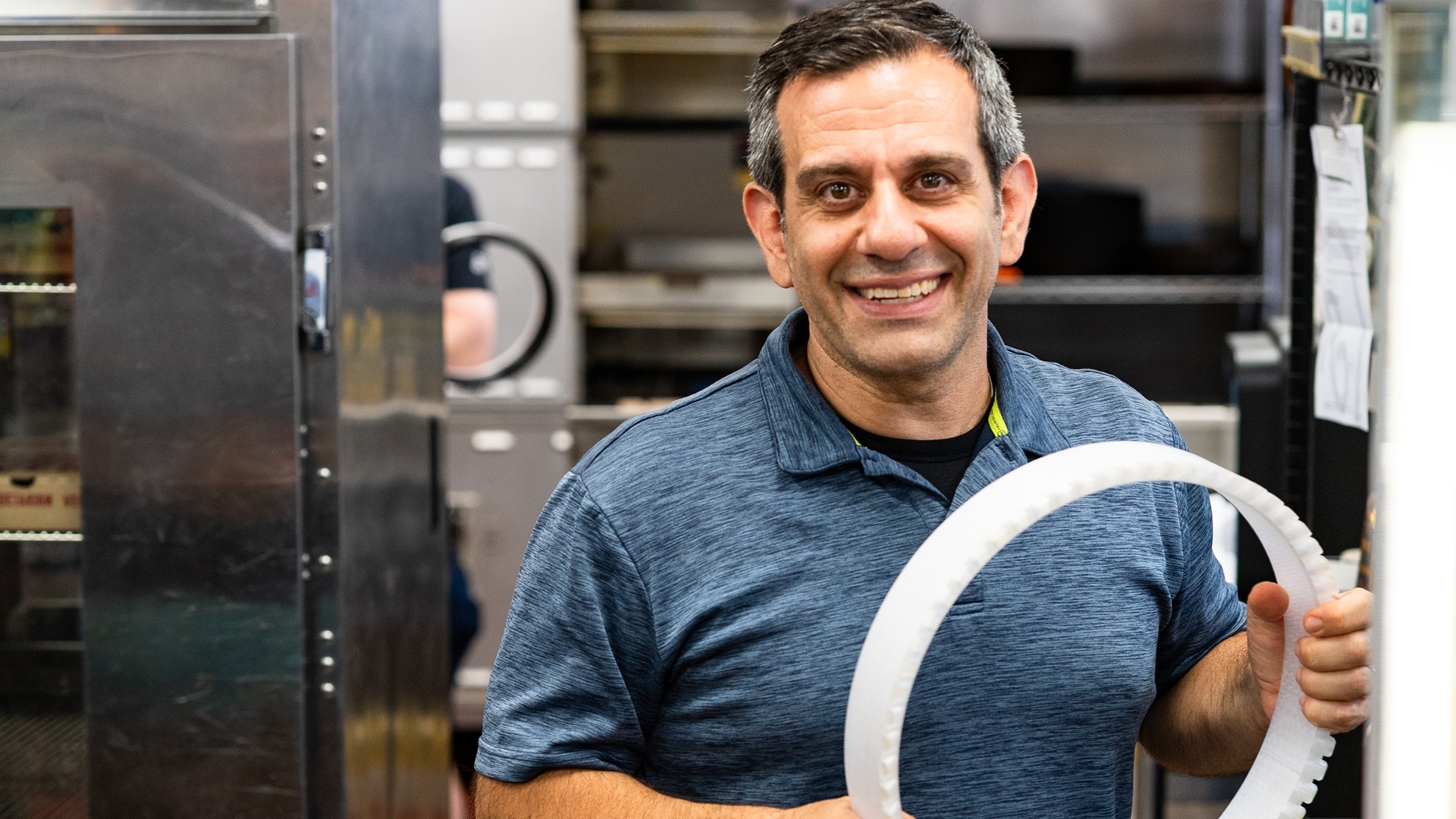
by Dennis Burck, Automation Alley
Tania's Pizza is a quintessential family-owned neighborhood pizza shop. For nearly 40 years, the Sheena family has served the Royal Oak community with pizzas, subs, wings and a signature calzone-style stuffed pizza.
Now, one of the shop's most important kitchen tools wasn't purchased from a restaurant supplier. It was designed and manufactured in-house.
With the help of Project DIAMOnD® and Oakland County, Tania's Pizza used a grant-funded industrial-grade 3D printer to create a custom crust crimper that makes its signature stuffed pizza faster and more consistently.
"I've told the kids in this store, everything you see here was just written in a notebook and executed on. I'm not some business guru," second-generation owner Amos Sheena said. "I'm just on a learning journey by experience."
Using food-safe and dishwasher-safe filament, the result is a simple tool that reduces staff training time and costs only a fraction of what the traditional manufacturing route would have required.
An Idea Waiting for the Right Time
The idea for a standardized crust crimper had been sitting on the shelf for years.
"Our initial thought was we need to seal pizzas more efficiently," Sheena said.
"When we're training kids, there's like four thousand different ways to tell them how to seal a pizza. You can say, 'Put your fingers on the edge, push down and in toward the center so the sauce doesn't come out.' I can give you a million iterations that I've had teaching this to somebody over the years."
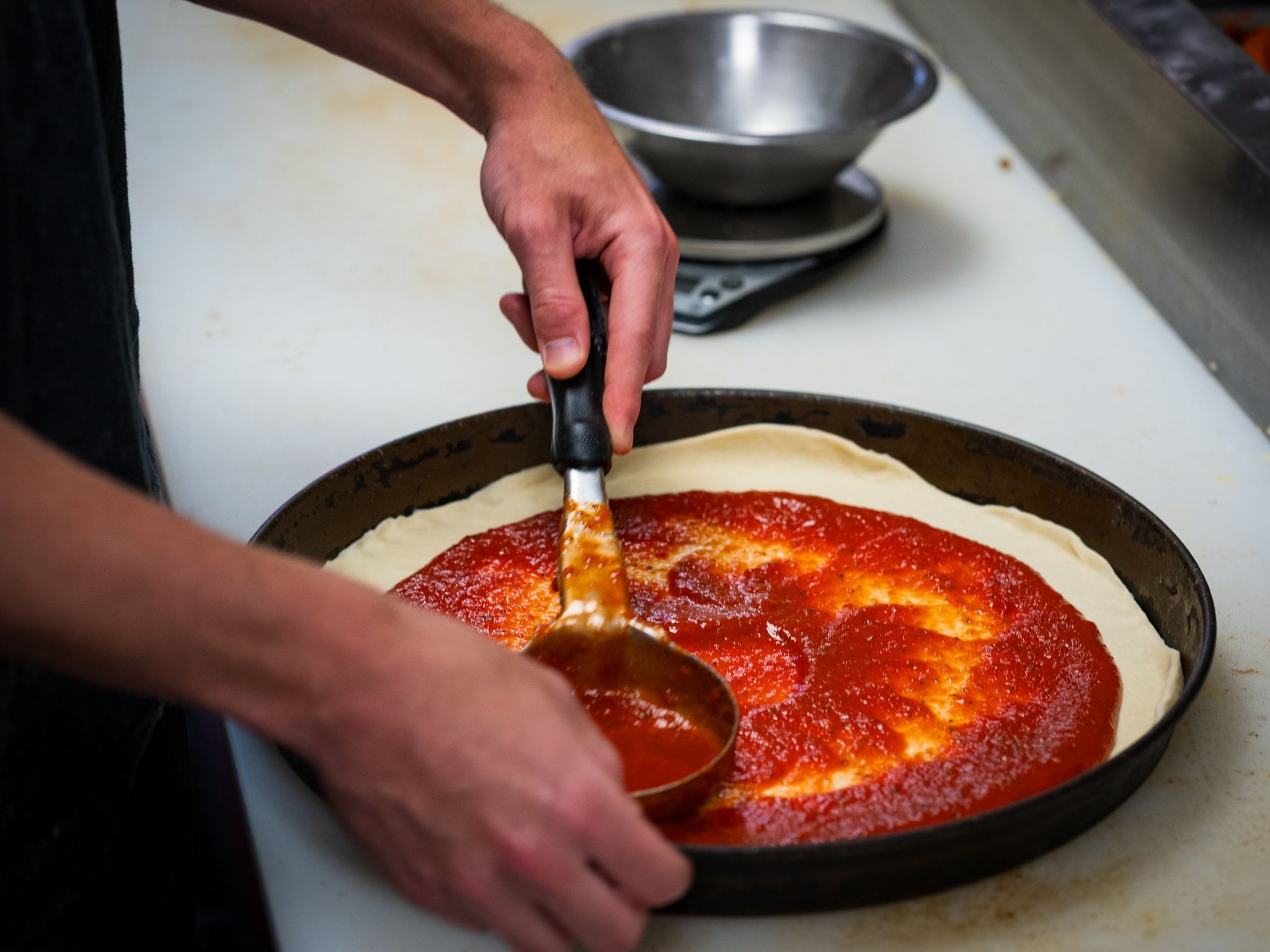
No matter how carefully employees were trained, each person sealed the stuffed pizzas a little differently. Some were faster than others. Some produced a better seal than others.
The solution was straightforward, a crimping ring that pressed the two sides of dough together. Manufacturing it wasn't.
Sheena contacted an engineering firm about designing and producing a custom metal crimping ring. The estimate came back in the thousands of dollars before production could even begin, forcing the idea back onto the shelf.
That changed after Sheena learned about Project DIAMOnD through an Oakland County CEO roundtable.
"I immediately thought this is up my manager Chris's alley," Sheena said. "We're doing this, and if we get approved, we could research things. We could make things. And he took it from there."
Pizzamaker. Manager. Engineer.
"I'm really just a hobbyist at the end of the day that has always been fascinated by technology," Tania's Pizza manager Chris Gough said. "I always wanted a 3D printer to mess around with, and once I had my own space I got a Bambu Lab A1 Mini. It really made me chase the opportunity here."
Through Project DIAMOnD Academy, Gough strengthened his skills in Fusion 360, learned the fundamentals of additive manufacturing and explored how design for additive manufacturing could solve real business challenges.
After completing the training, Tania's Pizza received an industrial-grade Prusa XL 3D printer through Project DIAMOnD.
"He was a kid at Christmas when that thing landed," Sheena said. "He was here putting it together after hours."
Gough wasted no time putting the printer to work.
"I've used maybe $200 worth of material so far," he said.
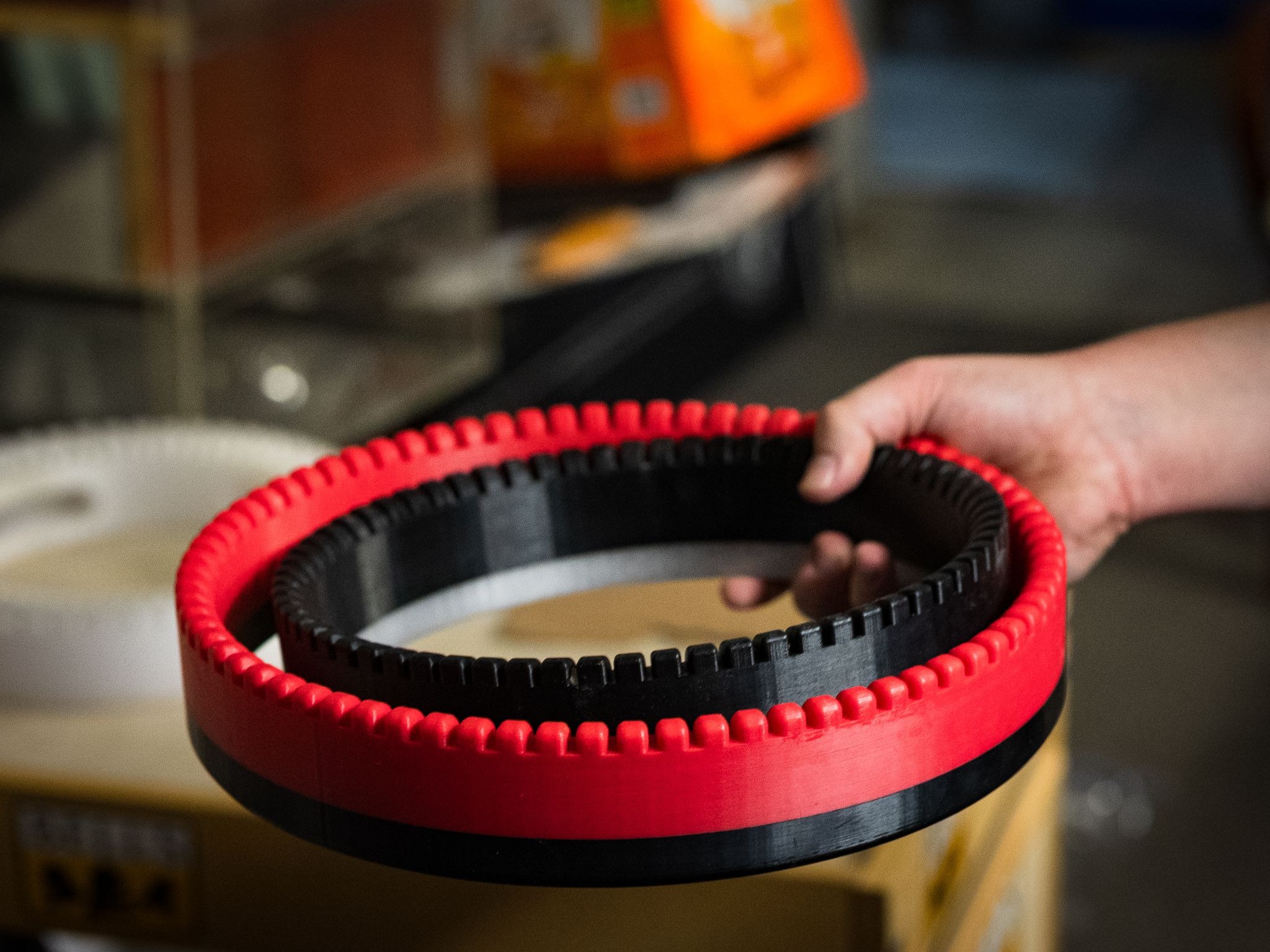
That material produced multiple iterations of the crust crimper as Gough refined the design, experimenting with strength, grip, crimping teeth and different materials before arriving at a tool ready for daily use.
In the kitchen, the difference was immediate.
What once required careful hand sealing around the entire pizza now takes only seconds with a firm press around the edge.
"Now it's like, just make sure the sauce gets out to here. Make sure your top is big enough. You can just kind of pin it with your finger a couple times and then boom, you're done," Sheena said.
Looking Beyond Pizza
The current version of the crust crimper has already streamlined production, but Gough is already thinking about the next iteration, including mounting the ring to a simple press with a handle for even greater consistency and ease of use.
For Sheena, that's the real value of additive manufacturing.
"A lot of people have ideas and too many times they think they're not achievable or they're not possible, so they just stop at the idea," he said. "What the 3D printer does is bring ideas to life. This idea that you have can be done at a low cost and not a lot of time."
The printer has also found uses beyond the kitchen. Tania's Pizza now produces keychains, merchandise and custom organizers for day-to-day operations throughout the restaurant.
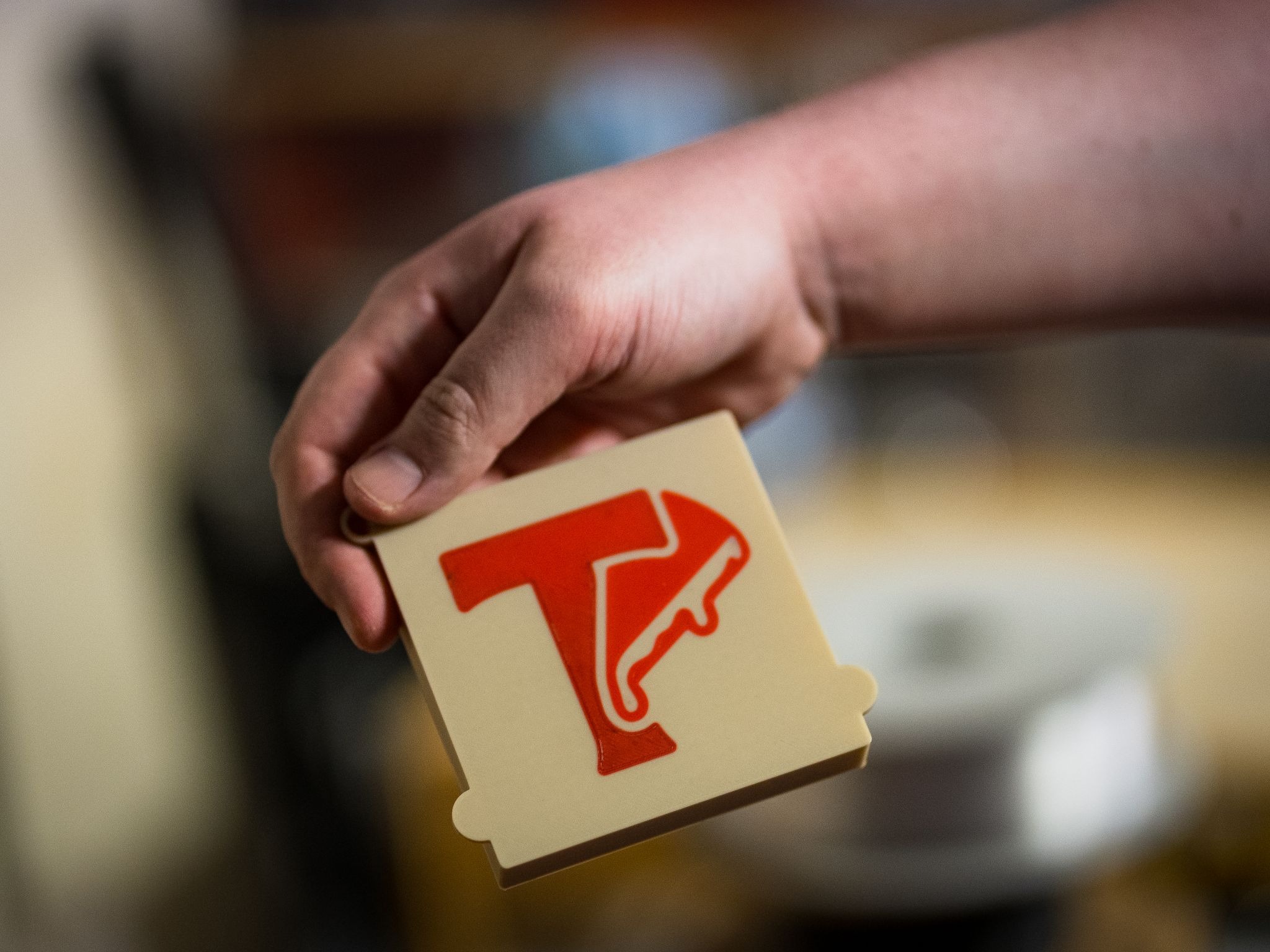
"The opportunities and applications are really endless," Gough said. "We've not only used it for things in the kitchen, but I've been talking with the retail manager and I've made little organizers for drawers already. It's not just a one application thing. You really need to look at your store, think outside the box and think bigger."
For Tania's Pizza, the biggest innovation wasn't replacing people with automated technology. It was giving employees a practical tool that made a decades-old process easier to learn, easier to repeat and easier to improve.